
When we talk about learning Excel, we almost always think of videos and written tutorials.
While these are great ways to learn Excel, books can do a much better job of giving you a structured learning experience. The best Excel books have been refined over many editions, and most are also available on Kindle.
Below is my list of the 10 best Excel books, covering everything from complete beginner guides to dashboards, VBA, and Power Pivot. You don’t need all of them. Pick the one (or two) that matches what you want to learn.
Disclosure: This page contains affiliate links. If you buy a book through one of them, I earn a small commission at no extra cost to you.
Which Excel Book Should You Get?
Here’s a quick way to decide. Click a book to jump to its full review.
| If you want to… | Get this book |
|---|---|
| One complete Excel reference | Microsoft Excel 365 Bible (2nd Edition) |
| Best single book for beginners | Microsoft 365 Excel All-in-One For Dummies |
| Master formulas & functions | Microsoft 365 Excel Formulas & Functions For Dummies |
| Build dashboards and reports | Excel Dashboards & Reports For Dummies (4th Edition) |
| Financial modeling | Building Financial Models with Microsoft Excel (2nd Edition) |
| Power Pivot, Power Query & DAX | Power Pivot and Power BI: The Excel User’s Guide to DAX, Power Query, Power BI & Power Pivot |
| Start automating with macros | Excel Macros For Dummies (3rd Edition) |
| Learn VBA programming | Microsoft 365 Excel VBA Programming For Dummies |
| Structured path to expert level | Learn Excel 365 Expert Skills with The Smart Method (6th Edition) |
| Build Excel applications (developers) | Professional Excel Development (2nd Edition) |
1.Microsoft Excel 365 Bible (2nd Edition)
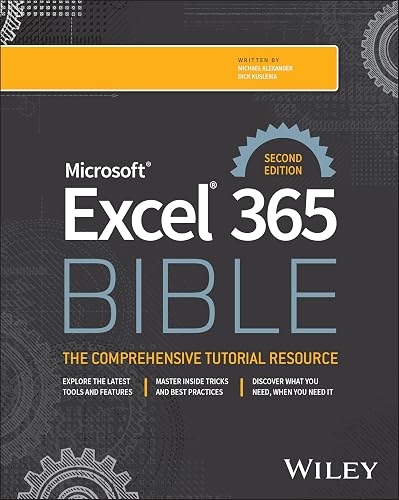
If you only want one thick book that covers all of Excel, this is the one. The Excel Bible has been around for decades (it started with John Walkenbach), and the 2nd Edition of the Microsoft 365 version is fully updated for the current Excel.
It starts from the basics and goes all the way to advanced topics, so it works both as a learning path and as a reference you keep coming back to.
Best for: Anyone who wants one big Excel reference that covers everything
Covers: Excel basics, formulas and functions, charts, Pivot Tables, data analysis, advanced features, and an introduction to VBA
View on Amazon2.Microsoft 365 Excel All-in-One For Dummies
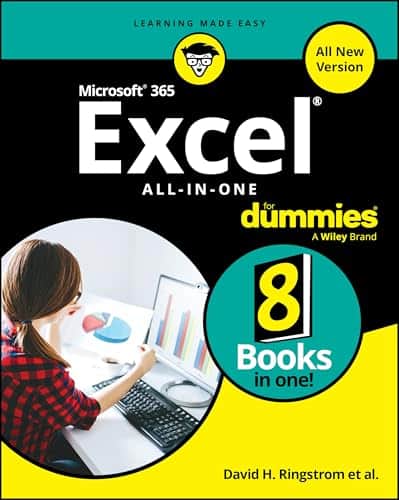
This is a great Excel book for beginners who want to build a strong foundation. It’s several For Dummies books rolled into one volume, written by a team of Excel experts (most of them Microsoft MVPs).
It covers all the important topics from scratch and also gets into some advanced concepts, so it will stay useful well past the beginner stage.
Best for: Beginners who want to build a strong foundation with one book
Covers: Excel basics, worksheet design, formulas and functions, charts, data management and analysis, macros and VBA
View on Amazon3.Microsoft 365 Excel Formulas & Functions For Dummies
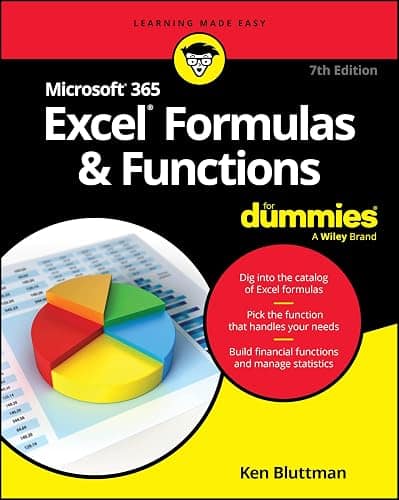
This book focuses on one thing: making you good at Excel formulas and functions. It walks through 150+ built-in functions with real-world examples, such as loan payments, investment tracking, and working with dates and times.
The latest edition is updated for Microsoft 365 and also touches on using Copilot with formulas.
Best for: Anyone who wants to get better at formulas and functions
Covers: Must-know functions, lookup functions, date and time, financial calculations, fixing formula errors, real-world examples
View on Amazon4.Excel Dashboards & Reports For Dummies (4th Edition)
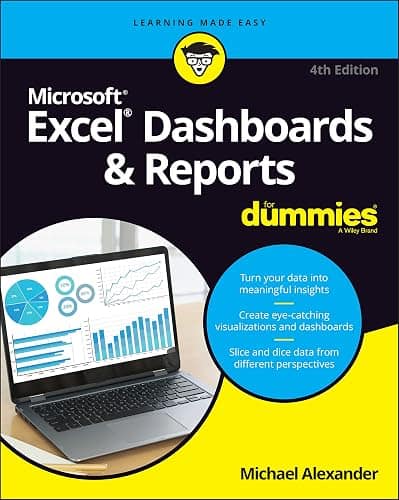
If you want to get better at presenting your data, this book by Michael Alexander is the one to get. It’s all about turning raw data into clean dashboards and reports that people actually understand.
It’s not meant for complete beginners. You should already be comfortable with charts and Pivot Tables to get the most out of it.
Best for: Intermediate users who present data to others
Covers: Dashboard rules and design, Excel charts, Pivot Table dashboards, automating and refreshing reports
View on Amazon5.Building Financial Models with Microsoft Excel (2nd Edition)
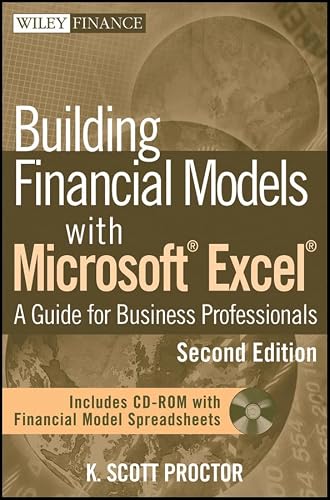
If you work in finance and need to build financial models in Excel, this book does a great job of explaining the concepts and shares complete models you can adapt to your own work.
It’s an older book, but financial modeling fundamentals haven’t changed, and it remains a solid resource. Not for beginners; it assumes you know your way around Excel.
Best for: Finance professionals who build models in Excel
Covers: Operating and capital budgets, financial statements, cash flow, valuation, financial ratios, sensitivity analysis
View on Amazon6.Power Pivot and Power BI: The Excel User’s Guide to DAX, Power Query, Power BI & Power Pivot
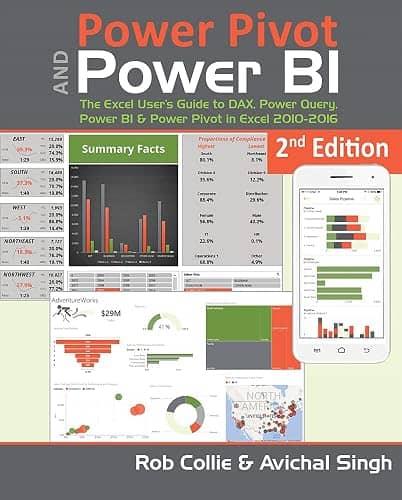
This book by Rob Collie (one of the original developers of Power Pivot at Microsoft) and Avichal Singh is still the friendliest introduction to the Power side of Excel: Power Pivot, Power Query, DAX, and Power BI.
Get this one only after you have a good grasp of regular Pivot Tables. It’s written for Excel users, not database people, which is what makes it so approachable.
Best for: Pivot Table users ready for Power Pivot, Power Query, and DAX
Covers: Power Pivot, data models and relationships, DAX measures, Power Query, moving from Excel to Power BI
View on Amazon7.Excel Macros For Dummies (3rd Edition)
If you keep doing the same things in Excel over and over, this book is a great starting point. It gives you ready-to-use macros for everyday tasks (cleaning data, automating reports, even sending emails from Excel) with clear explanations of how each one works.
It’s a gentler entry into automation than a full VBA programming book. Once you’re done with it, the VBA Programming book below is the natural next step.
Best for: Anyone who wants to start automating Excel without learning full VBA first
Covers: Macro fundamentals, recording and editing macros, working with workbooks and ranges, automating reports, cleaning data
View on Amazon8.Microsoft 365 Excel VBA Programming For Dummies
This is the book to learn VBA from scratch. Even if you have never programmed before, it builds up from the basics: the Excel object model, writing your own procedures and functions, and building user forms.
This series was started by John Walkenbach, and the latest edition is fully updated for Microsoft 365 Excel.
Best for: Beginners who want to properly learn VBA programming
Covers: VBA basics, the Excel object hierarchy, creating macros, custom functions, user forms, error handling and debugging
View on Amazon9.Learn Excel 365 Expert Skills with The Smart Method (6th Edition)
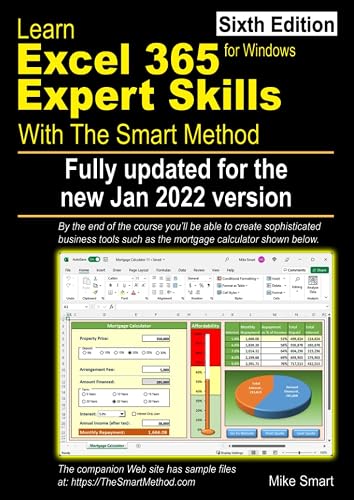
Most Excel books are references. This one is a course. It’s organized into sessions and lessons, each with a clear objective, which is why a lot of Excel teachers use it in their classes.
It’s not a beginner’s book; it assumes you already know the basics and takes you to expert level from there, in plain English with no jargon.
Best for: Users past the basics who want a structured, lesson-by-lesson path to expert level
Covers: Tables and structured references, advanced filters, What-If analysis, OLAP and data modeling, advanced charting
View on Amazon10.Professional Excel Development (2nd Edition)
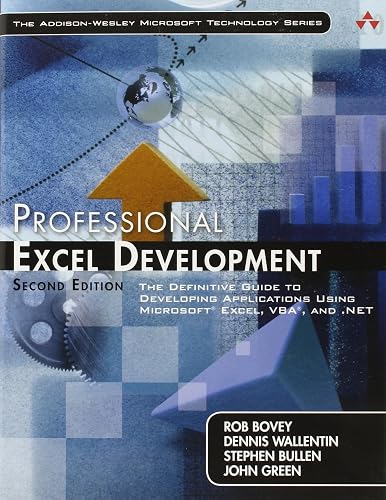
This one is for developers. If you build full applications on top of Excel with VBA and .NET, this is the definitive guide, written by four authors, three of them Excel MVPs.
It’s not for everyday Excel users. But for professional Excel developers, there’s still nothing else like it, which is why it remains the standard reference years after publication.
Best for: Developers building full applications on top of Excel
Covers: Application architecture, worksheet and UI design, add-ins, error handling and debugging, VBA optimization, Windows API, VB.NET
View on AmazonLast Word
You don’t need all these books. Each one is strong in its own area, so pick based on where you are and what you want to learn.
If you’re a beginner, start with the Microsoft 365 Excel All-in-One For Dummies or go straight for the Excel 365 Bible if you prefer one big reference. To get better at formulas, get Excel Formulas & Functions For Dummies, and for a structured course-style path, go with Learn Excel 365 Expert Skills.
If your goal is dashboards, get Excel Dashboards & Reports For Dummies. For financial modeling, it’s Building Financial Models with Microsoft Excel, and for Power Pivot and DAX, nothing beats Power Pivot and Power BI.
And if you want to automate Excel, start with Excel Macros For Dummies, move up to Excel VBA Programming For Dummies, and if you build Excel applications for a living, get Professional Excel Development.
You may also like the following Excel tutorials/resources: